Beginner's Guide to Automating Your Weekly Meal Prep
Meal prep has a reputation problem. Between the Sunday-marathon photos and the fridge lined with identical containers of chicken and rice, it stopped looking like something a normal person could keep up with. The version that survives contact with a real week is smaller and duller: a fixed prep slot, three reminders, one shopping list, and a couple of appliances that do the tedious work while you get on with something else. Set those up and the cooking part mostly takes care of itself.
Before you think about recipes, choose a time. Not the ideal time — the one you can genuinely protect most weeks. For a lot of people that is Sunday late morning, before the day fills up, or Wednesday evening once the shops have quietened down. Sunday at eight in the evening is the classic mistake: you are tired, the kitchen is still a mess from dinner, and the plan collapses by week three.
Put the slot in your calendar as a repeating event and name it after the action: “Cook for the week,” not “Meal prep.” Block ninety minutes the first time and sixty after that. If someone else in the household cooks too, share the entry so nobody schedules over it.
The test is simple. If you would cancel a haircut to protect it, it is a real appointment. Treat the prep slot that way for four weeks and it stops being something you have to remember.
Beginners usually start by choosing seven recipes, then try to cook all of them at once. That is why the first attempt takes five hours and the second never happens.
A template is easier. Pick one option from each line and you have a week of meals without a single decision on a Tuesday night:
Rotate one element each week instead of rebuilding the whole plan. Same template, different sauce, and the shopping list barely changes.
Most reminder systems fail because there are too many of them. Three is enough, and each one should fire before you need it rather than when you are already standing in the kitchen wondering what happened to the plan.
Phone alarms work fine. A shared list or calendar event works better if more than one person shops. If you have a smart speaker, a recurring reminder you can hear from the kitchen is genuinely useful. Name reminders after the action rather than the topic: “Write the list” beats “Shopping.”
Keep a single running list instead of starting a fresh one each week. Use a notes app or a pad on the fridge door — whichever you will actually update.
Order the list the way you walk the shop: produce, chilled, dry goods, frozen, household. You stop doubling back down aisles, and you start noticing when something has sat on the list for three weeks without being bought. That is a useful signal; either the recipe or the habit needs changing.
Before you leave, spend two minutes on the cupboards. Open the fridge, check the grain jar, count the eggs. Most overspending in a kitchen does not come from expensive ingredients — it comes from buying a fourth tin of tomatoes when three are already in there.
Keep a small emergency shelf as well: tinned soup, frozen peas, eggs, bread for the freezer. That shelf is what stops a chaotic Wednesday from turning into a takeaway.
One tray, high heat, vegetables and protein together. Line it with baking paper and the washing up is a single object. This is the lowest-effort route to two or three portions of roasted vegetables for the week.
Rice, quinoa or barley with no timer-watching. If you own one, run it during the prep slot. If you do not, a large pot with a lid does the same job — do not buy an appliance to solve a problem a lid already solves.
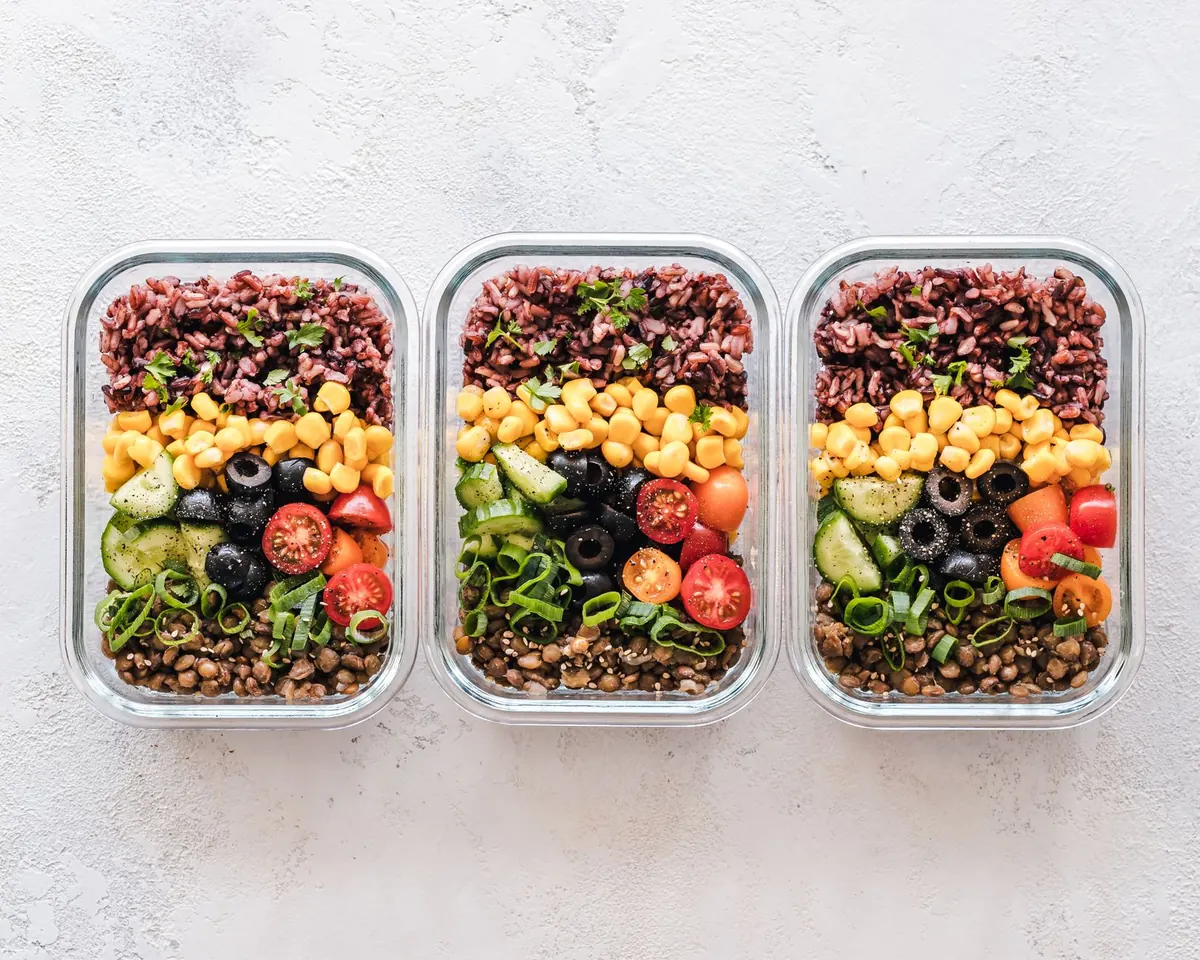
Same size, see-through, stackable. You eat what you can see, and mismatched tubs hide at the back until they become a science experiment. Buy one set that stacks and stop adding to it.
None of this is clever or expensive, which is the point: the tools should remove decisions, not add features.
Split the work. On your main prep day, cook and portion the things that keep well: grains, roasted vegetables, a big pot of something, washed salad leaves. Then take a ten-minute midweek top-up — Wednesday, say — to chop fresh vegetables, boil eggs and repackage anything running low.
Two short sessions beat one heroic one for a plain reason: fresh food has a shelf life. A dressed salad made on Sunday is a disappointment by Thursday, but undressed leaves, a jar of dressing and a box of roasted vegetables will carry you to Friday.
Portion before you put things away, too. Food that goes into the fridge in a big pot tends to be eaten in big-pot quantities. Boxes of roughly equal size make the week predictable and make lunch a matter of opening the fridge rather than negotiating with it.
Here is a week that is realistic for a beginner.
Expect the first attempt to be clumsy and the second to be quicker. What makes this stick is not enthusiasm; it is that the reminder fires whether or not you feel like it, the list is already written, and the containers are already in the cupboard.
One sensible note: if you have a medical condition or specific dietary needs, take advice from a qualified professional rather than copying a stranger's template. The structure above is about habits, not nutrition.
Photo: Ella Olsson / Pexels
Previous Post
Smart Watch vs Fitness Tracker: Which Is Better for Everyday Wellness?
Next Post
7 Common Mistakes That Make Smart Bulbs Less Useful